
One of the first Low Country materials I became enamored with is TABBY. An early form of today’s concrete, tabby is made taking oyster shells – visible everywhere you look in the local marshes – crushing them and mixing in lime and water to make a soft paste that is poured between wood forms and left to harden. It has outstanding structural integrity and straightforward to work with.
Examples of original tabby structures exist through out the low country. On Spring Island there is a grouping of ruins dating back to the 1800s that show the tabby construction technique brilliantly.


For our home, we used today’s version of tabby in both decorative and structural ways – adding texture to foundation walls, and enhancing the porch floors.
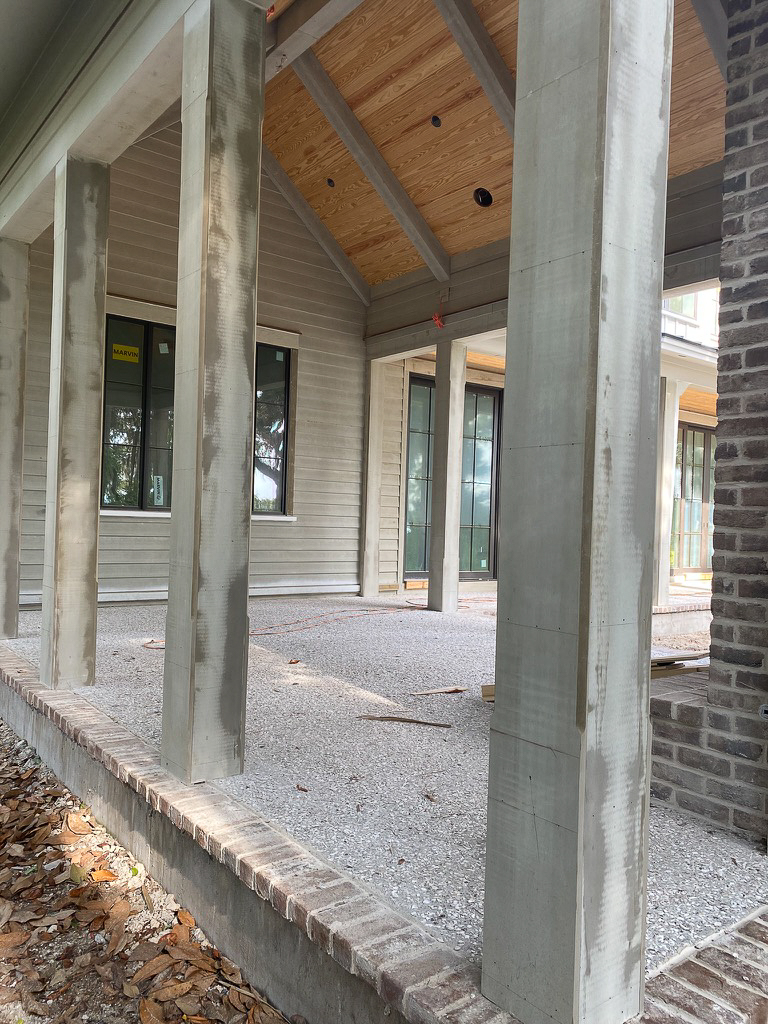
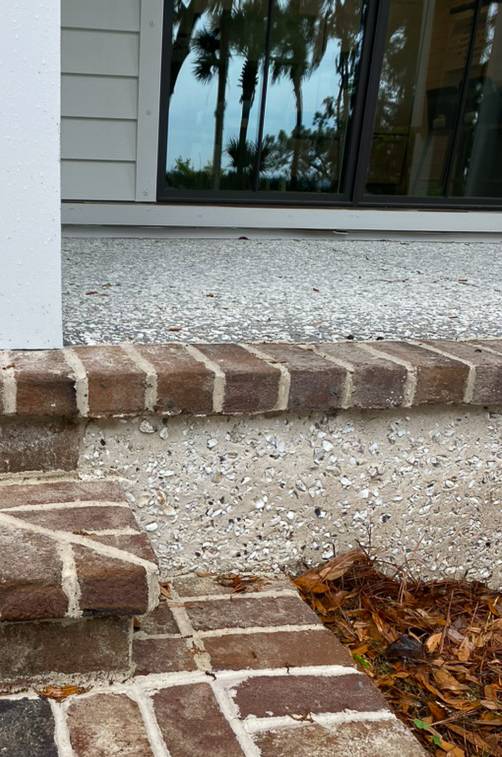

I was curious about the environmental implications of the oyster shells being used in construction materials. On one hand, tabby concrete using oyster shells has been shown to emit less of the air and environmental pollution that typical concrete emits. Also, it is typically sourced locally so results in a smaller carbon footprint from transport. On the other hand, as The Marine Resource Research Institute explains, over-farming the oysters can lead to reef depletion. Oyster shell tabby concrete is a small slice of why the oysters are farmed; the environmental impact is worth thinking about, as are its many positive features.
 Building Spring Island