
IMPLICATIONS FOR HOME DESIGN
I won’t pretend to be a knowledgable historian or anything but an interested new-comer when it comes to the concept of “LOW COUNTRY”. I grew up in the midwest, went to school in New York state, dabbed my toe in Dallas for a hot minute, then circled back to Chicago for business school and stayed to work and raise a family.
It wasn’t until the middle of the 2020 Covid quarantines when, desperate for a change of scenery, Todd and I jumped in the car and headed south that I was introduced to the term “low county”. I became intrigued/slightly obsessed with unraveling what this meant, and more specifically, what it might mean to live in, design for and become part of “low country living.”
Low Country by definition is the region of South Carolina that runs along the eastern shore of the state, south of the Sandhills, bordering the Atlantic coast and buffered from the ocean by salt marshes and tidal rivers. Nine counties and a population of roughly 1.1 million people further define the region.
As would be expected the region’s residential design seems to have evolved from 2 factors – climate and its early settlers’ culture. It’s the combination of those two things that make this area unique and beyond cool. I’ll delve into the cultural influence of the region’s earliest residents in a future post; for now here’s how the salt marsh climate of the low country might impact a HOME’S DESIGN, and how we took those concepts and made them our own.
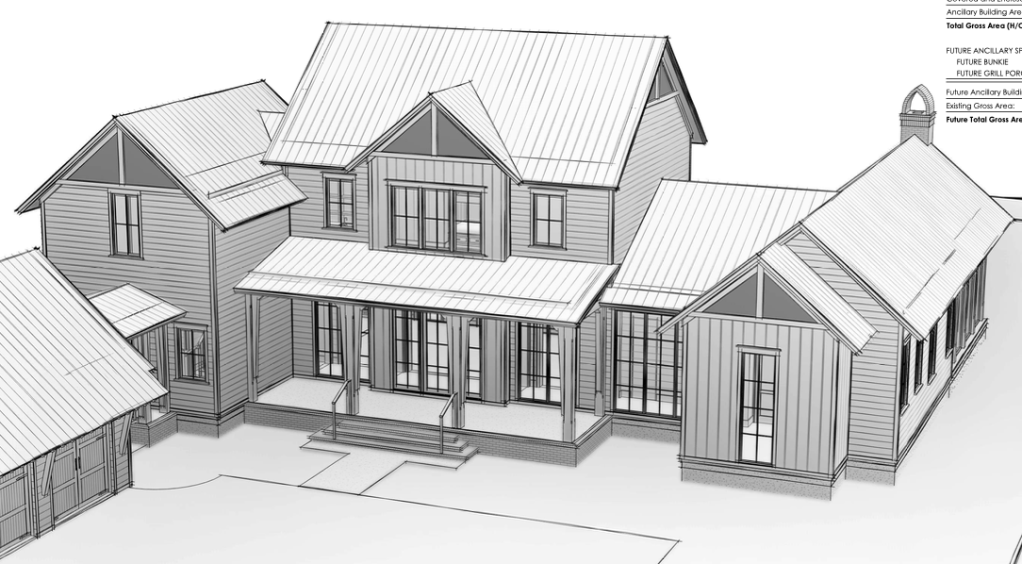
Many low country homes have FLOOR PLANS that are a serious of smaller masses, rather than one large structure. Two reasons for this: the first to add windows and openings that increase air flow, and the second is to separate functions (i.e. kitchens were often their own unit) and allow rooms not being used to be closed off. Because of the hot, humid summers many family members often left for the cooler mountain breezes this time of year, leaving behind empty unused spaces.


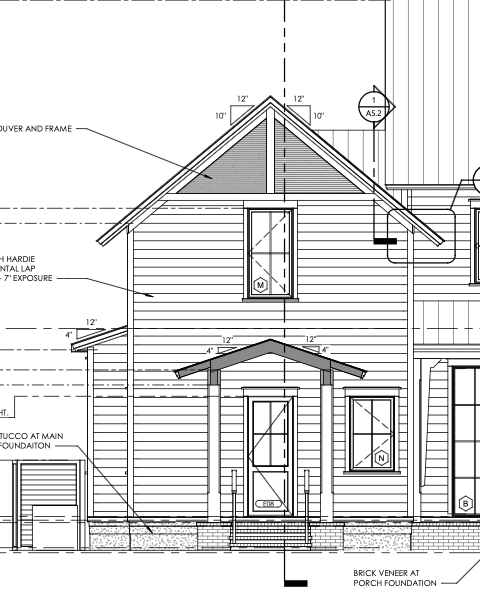
Open air BREEZEWAYS are frequently used to connect these multiple smaller structures. PORCHES obviously bring in breezes and provide cover from the hot sun. We choose to do an open air porch in the front and screens in the back.

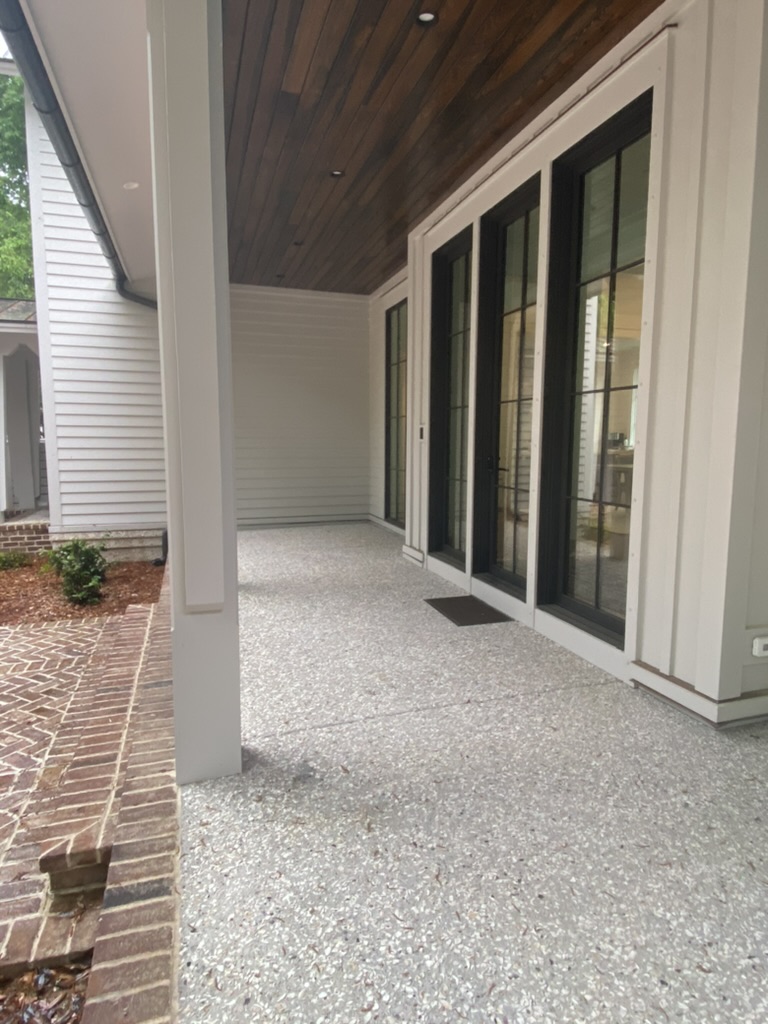
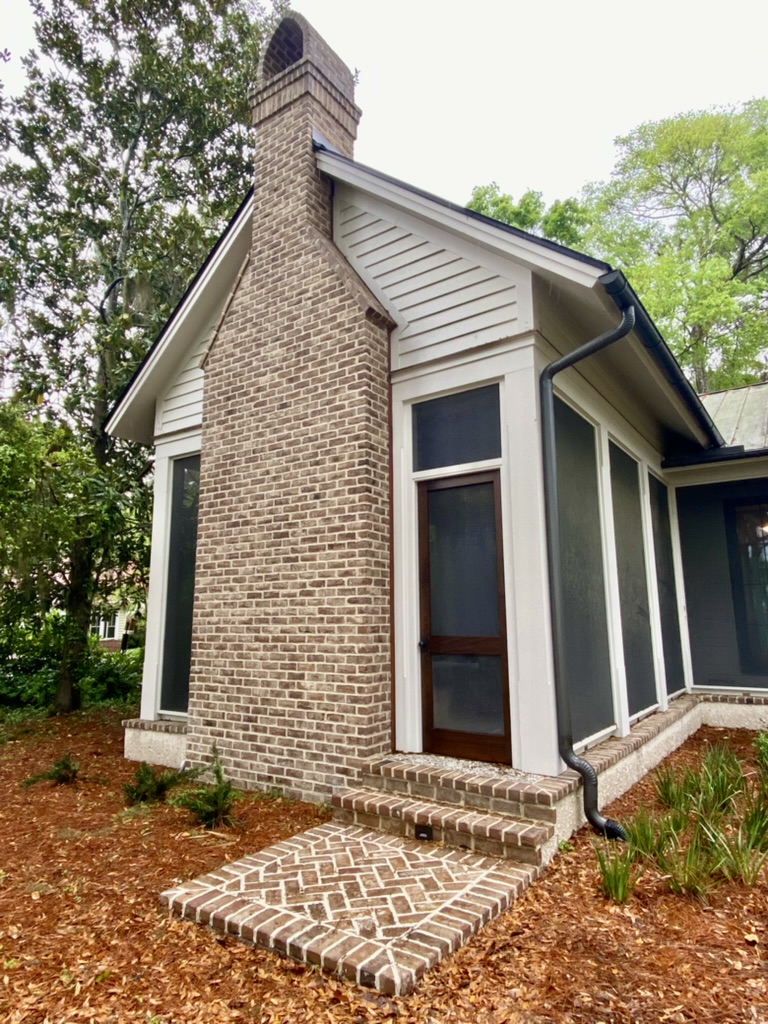
Large scale WINDOWS and DOORS are also typical low country features for the same reasons. We clearly nailed the large scale part, but opted for a modern version instead of more traditional double-hung or windows with transoms above.
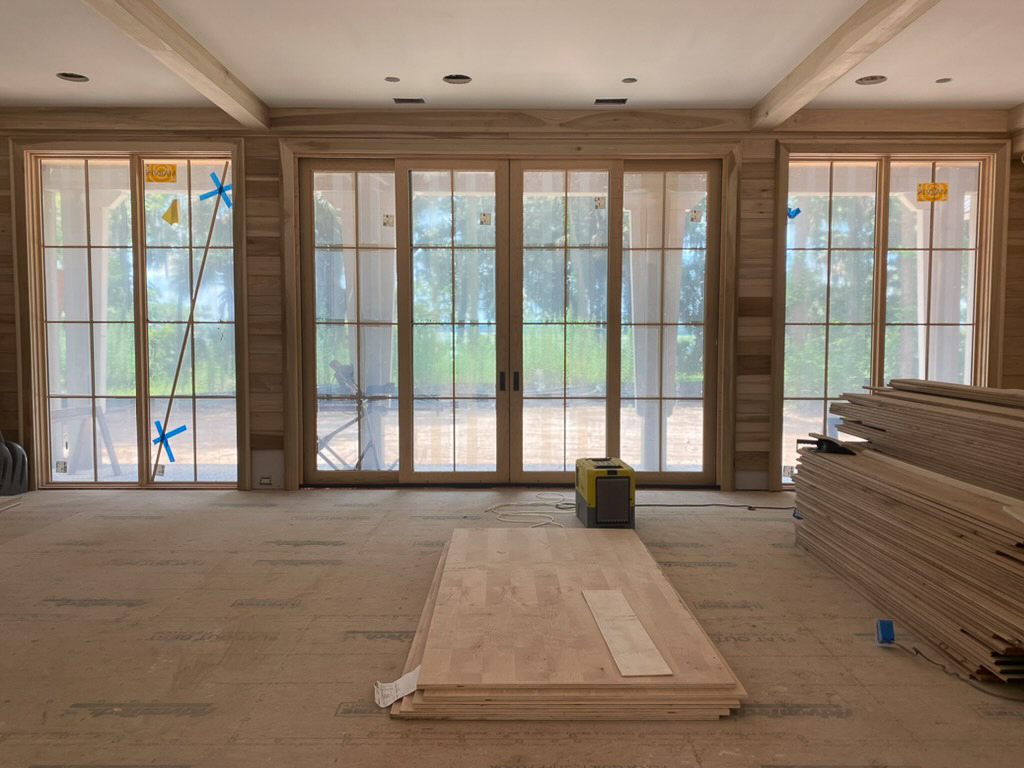
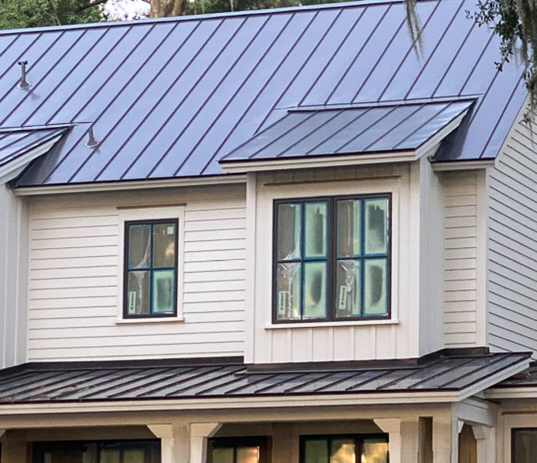
Historically, low country homes combat hurricanes coming off the Atlantic with SHUTTERS. To create a more sleek modern look we skipped the shutters and opted for wind and shatter resistant glass on the second floor, and a system of temporary wind resistant vinyl screens that can be covered over any glass on the ground floor.
Do you know of other ways the “low country” vibe has been modernized? Please share below!
Next up … low country building materials and architectural details ….
 Building Spring Island